Wednesday, 17 October 2012

A Snug New Start For An Old Fleece Jacket

If you're a tech-friendly person like me, you'll know that it isn't enough to just have your Kindle or your iPad or your smartphone. No, they have to be dressed up in fancy new duds whenever you take them out for a walk. The tech accessories market is huge, and encompasses everything from woollen socks to mil-spec protection.

Now a new company, ReFleece, are bringing a bit of eco-chic to the market. Crafted out of recovered  jackets sourced from sustainable manufacturer Patagonia, and lined in post-industrial fleece scrap, their iPad and Kindle cases are colourful, practical and more than a little desirable. Even better, they remain completely recyclable. The case and lining are pressed together using a low-energy process and no nasty chemicals. They provide water-resistant protection for your precious devices, and look darn stylish in the process. A must, I think, for the techy fashionista.


ReFleece cases are available in Patagonia stores, or online at the ReFleece website.

Friday, 12 October 2012

Waste Not, Want Not

Socially-conscious fashion label EDUN, who made a splash at New York Fashion Week with their rock-chic stylings last month, found they had a hefty over-run of fabric in a fetching camo print. They could have simply thrown it away.

Instead, they teamed up with footwear designer Matt Bernson to create a range of shoes that are really going to work both on the beach and in the club next summer. Made from tenting canvas and featuring  brasswear from artisans in Kenya's Bombalulu workshops, this co-production really does solve several problems at once, and does it in a downright stylish way.

I think you're going to be seeing a lot of these next summer. I suggest you get in quick!

For more, check this article on Ecouterre.


Monday, 8 October 2012

Sustainable Luxury

One question raised after the green fashion sector's sterling showing at both London and New York Fashion Weeks was: can eco and high-end fashion really sit comfortably together? Isn't there a mismatch between the market, the ethics and the ethos?
This shows a fundamental misread of green fashion, that assumes that the clothes are still knitted out of jute by tiny communes and sold exclusively through stalls at achingly worthy London markets. The truth is a lot simpler and a lot less insulting to everyone concerned.
Green, eco and sustainable fashion takes its mission statement from the idea of respect. For the planet, in terms of the way that the fabric is produced, and how that material is manufactured into clothing. For the people who grow the crops, weave the fibres, and make the clothes. In order to show this respect, the green sector makes sure that cost-cutting measures do not include the dumping of toxic chemical byproducts into local water tables, or the exploitation of their workforce.
No-one considers high-end producers like the suit-makers of Saville Row to provide anything but luxury goods. Yet these clothes are produced from sustainable materials by workers who are highly skilled, and valued and paid accordingly. This ethos is at the heart of green and sustainable fashion, and I'm bewildered that anyone would think otherwise. Long-Time Pier Crush Vivienne Westwood has often stated that the best way to green up your wardrobe is to buy fewer, but better-quality and therefore longer-lasting clothes. It's cheap fashion that's the problem, not the sort of heirloom item that will cost more initially, but become a mainstay in your fashion arsenal for years to come.
In other words, we need to see more successes like the big noises made by eco-fashionistas at London and New York, to really show a sceptical public that high-end ethical fashion isn't just this year's fad. It's the future.

Wednesday, 3 October 2012

Ethical Fashion's High-End Makeover

Could 2012 be the year that the fashion industry finally starts to take ethical and eco-fashion seriously? The signs are pretty positive.

The September London Fashion Week was widely hailed as one of the greenest yet, with the EstEthica annex making a real splash. It suddenly felt like the place where the smart money was gravitating, rather than an out-of-sight, out-of-mind offshoot. Brands like Honest by Bruno Pieters, Auria X swimwear by Margot Bowman and the cool street style of White Tent showed a sector that has its finger on the pulse of modern fashion without sacrificing a shred of green cred. Add in the first ever ethical Vogue's Fashion Night Out, one of the big tickets of the whole week, and you can see why the buzz over eco-fashion is growing.

That buzz has been transmitted across the Atlantic, where New York Fashion Week has seen ethical fashion making a big noise on the catwalks. Designers like Nina Skarra and Kimberley Ovitz have showcased clothes made from tencel, organic cotton and soya, while Brazilian brand ‘Osklen’ by designer Oskar Metsavaht made a big splash with  creations made of ecological materials like fish leather (no, me neither) and vegetable dyed waste silk.

There's a palpable air of exciement around eco and green fashion. Sustainably-minded designers and brands are showing how they can make the grade as the next big thing, which can only help the cause. Spring and Summer 2013 could be very interesting indeed...

Friday, 28 September 2012

Dirty White Gold

The message about the environmental impact of cotton can sometimes get confused or diluted. If a report or two fudges the facts or gets their numbers skewed, then suddenly there are screams of bias and the whole issue just gets that bit more muddled.
Here's a stat that often gets ignored: over 300,000 Indian farmers have killed themselves over the past few years as a direct consequence of spiralling debts brought on after they moved their farms over to cotton. This is a humanitarian disaster that springs from our desire for cheap clothing and the widescale industrialisation of agriculture in the Third World. The story of these farmers is one that has been kept quiet for too long.
Now director Leah Borromeo is looking for funds to make a documentary about the human cost of fast fashion. Through crowd-funding website Sponsume, she and her crew are after £18,000 to complete the financing round she needs to get the film done. An ex-foreign news editor for Sky News, Leah has a decade's experience in broadcast journalism, and she's working with a solid core of fellow activists and film-makers like Emily James, who made last year's climate change rallying call Just Do It.
Dirty White Gold will, despite its grim subject matter, not be dour or preachy. Leah has prankery afoot, and she intends to make a movie with a quirky, funny edge to it.
As someone who's made low-budget films, I know what an absurdly tiny sum £18,000 is in movie-making terms. It would be a crying shame for a project like this not to be made if there's anything we can do about it. So this is a call-out for contributions. Funding ends on November 9th, and there are plenty of awards and pressies available to sponsors. Who knows, you could even get your name in the credits of the film!
I've dropped £30 into the pot on behalf of Pier32, and it would be brilliant if all our regular readers could do the same--or better! Dirty White Gold is a project we'll be following with great interest here at The Pier, and there will certainly be a review up as soon as we get a chance to see it.
For more info, and to involve yourself in the film, check out Sponsume, and Dirty White Gold's Facebook page.

Wednesday, 26 September 2012

The New Style

Not sure if you've noticed, but here in the UK, the summer (such as it was) has ended with a vengeance. Torrential rain, storms, floods... brrrrr.

It's time to start digging out warmer clothes, in other words. Much as I hate to spoil my green credentials by suggesting you buy new instead of reusing the togs you already have in your wardrobe, I would be remiss in my duties if I didn't point out the new range of jackets and sweatshirts at Pier32.

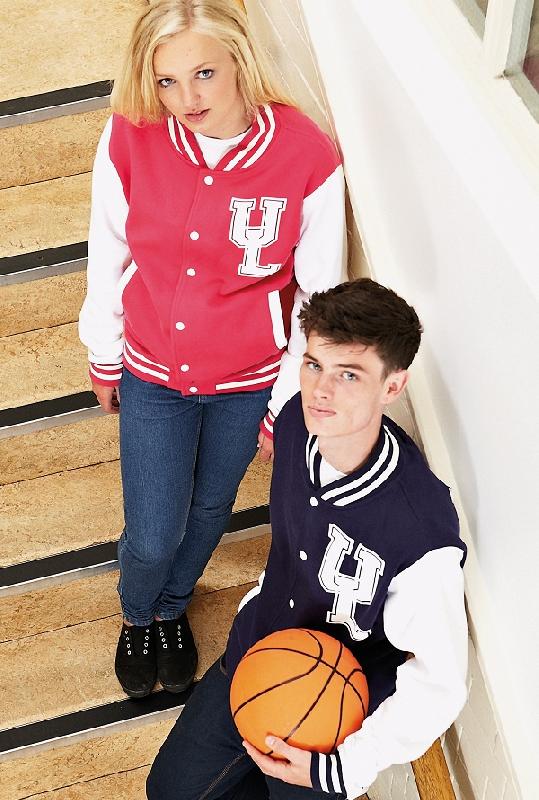
In partnership with AWDI, we can now offer a cool range of varsity jackets and sweats that are affordable and pretty darn stylin'. The clothes have been made in a WRAP-certified factory. WRAP provides a detailed audit that checks many aspects of ethical production, including the ages of employees (to prevent child labour) the provision of working fire exits, clean toilets, maternity leave and voluntary overtime. In short, if you buy clothing with WRAP certification, you're buying clothes that are sweatshop free.

So, if you do happen to be in the market for new jackets and sweats for your club, team or business this autumn, it's worth looking at what Pier32 can do for you. Check out the gear on our website, and find out more with the latest Pier32 newsletter.

Oh, and did I mention we've finally made it onto That Facebook? We'd love it if you'd like us!

Friday, 21 September 2012

A Tip Of The Hat For Pachacuti


In my day gig, the one I use to pay the mortgage and keep me in socks and beer (sadly, I have yet to be offered a pair of socks by Guru Ian, but hey, I live in hope), I get to look at a lot of archive film. One thing that's very noticeable in these, especially in the crowd scenes, was that not that long ago, almost everyone wore a hat. From the trilby to the flat cap, the bowler to the fedora, it used to be seen as a poor show not to be out and about without a titfer. 

Times have changed, and I for one think that's a shame. I do my bit, and am usually seen rocking a natty forage cap which gives me a brisk hint of Guevara-era revolutionary chic. But let's face it, we can all do better than the ubiquitous baseball cap. 

Long-time Twitter buddy of The Pier Pachacuti are out to change that trend with their brilliant range of Panama hats. Their new collection for spring and summer 2013 shows a real flair for both design and colour. The hats feature hand-embroidery, leatherwork and hand-made ribbons and come in vibrant shades of lemon, aqua and rose. 

The hats are made in the Andes of Ecuador, by a group of women's associations that are helping to keep the traditional skills of weaving and embroidery that are in danger of being forgotten. 

The artisans that work for Pachacuti are paid fairly and treated with respect for their skill and craft. This isn't surprising. Pachacuti is something of an innovator in the field of fair trade and sustainability. They were the first company in the world to be Fair Trade Certified by the World Fair Trade Organisation. They're a pilot for the EU Geo Fair Trade project, providing traceability and transparency through their supply chain. Their work in the field has led to a string of high-profile commendations, including the Observer Ethical Awards. 

In short, Pachacuti are doing everything right, and we offer a tip of the brim to them and their top hats. 

Well, panamas. You get the idea. 

Monday, 17 September 2012

Don't Get Stung: The Re-Growth Of Nettle Fibre


The kerfuffles from our last post besides, we're all pretty much agreed that cotton, even organic, ethically-produced cotton, is not the best thing for the planet. The search is on for a fibre that can do the job without the environmental impact. As luck would have it, there is an alternative. One with historical precedent, and one that 's absurdly easy to grow. In fact, if you're a gardener, you're probably growing this plant already, and cursing your rotten luck.

The humble nettle is about to have a major change of reputation. 

In fact, cloth made from the stingy little buggers has been around for millennia. Documents from the Elizabethan era quote women of the court who waxed lyrical about clothing made from nettles, and the Virgin Queen herself was said to have slept in a nettle bed. The fabric was famed for its smooth, silky finish. With the advent of cotton in the 1600s, however, the fabric fell out of favour. Nettle fabric is made from the tough stem of the mature plant, and was harder to weave into flax than cotton. Plus, as you can imagine, it was a pain to harvest. 

Nowadays, modern science is taking the sting out of making cloth from nettles. New spinning technologes and breeds of super-high fibre plants mean that manufacturers around the world are taking another look at the plant. Plus, gardeners will grimly admit that the plant is exceptionally easy to grow. It's a perennial, which means it will spring back year after year, and is tolerant of a wide range of soil conditions and resistant to pests--all solid advantages over its prima-donna cousin cotton, which needs special fertilisers and pesticides to grow well.

Thus far, however, the take-up has been slow, as farmers have been understandably reluctant that turning their fields into nettle patches is a good idea. But the tide is starting to turn, with companies like G-Star Raw offering limited-edition jeans in their Raw Sustainable range made from a nettle/denim mix. Interest is starting to turn back towards this most revered and ancient of fibres.

Meanwhile, if any manufacturers would like to get in in touch, I have a large surplus of the stuff in my back yard that they can have for free. 

Thursday, 6 September 2012

Food Or Clothes? The Argument Continues...

In an article back in March, The Price Of Cotton, I wrote about the impact that intensive cotton farming could have on the global economy, as more and more arable land is shifted from food to cash crops. It turns out that the figures I used to support the article may have been a little inflated.

So is it the case, as I asserted, that cotton uses up more land than food crops? Well, no, probably not. As a series of commenters made clear in response to the Guardian article I cited, the actual figure is closer to 4% than the 42% quoted in Pamela Ravasio's piece. 
Mother Jones made the most nuanced analysis of where Ravasio could have gone wrong. Other commentators saw the opportunity to give ethical fashion writers in general a bit of a kicking for a lack of individual rigour.

This is unfair, as although the figures in this particular example were wildly skewed, the general thrust of Ravasio's argument remains true. Global cotton production doubled between 1960 and 2001, and in Africa production spiked by a factor of ten. There is an ever-increasing demand for cheap, disposable clothing, and the fabric to make it has to come from somewhere. More and more land is being turned over to cotton to feed that demand, even as food prices reach an all-time global high. And let's not forget that the crop is environmentally damaging and heavy on scant resources.

If 42% of arable land was turned over to cotton production, that would be an environmental diaster. But even 4% is a figure that badly needs to start trending downwards if we are to keep the growing population of the world fed and healthy. Here at the Pier we stand by that position, even if some of our supporting documentation is a bit off.

We'd like to thank the anonymous commentator that pointed us in the right direction for this blog post.

Tuesday, 4 September 2012

Fashion's Dirty Secrets

At heart, I am an east London boy. It's pretty well buried, but it's there and it tends to come out when I've had a few beers, glottal stops, dropped 'g's and all. Having the Olympics in East London has been brilliant, as it's helped to regenerate an area that desperately needed investment.
Walthamstow, London E17 is where I was born and spent a decent chunk of my life. It's a vibrant, arty place with its own sense of self and place. Over the past few years the arty community of The 'Stow has been working hard to highlight the cultural worth of the place.
Here at The Pier we are great admirers of Ms. Wanda's Wardrobe, a brilliant ethical fashion blog based in E17. They are exhibiting as part of the ongoing E17 Art Trail. The show, Photographing Fashion's Dirty Secrets, features photos donated by Greenpeace, ActionAd and Traid that show some of the stories, crimes and injustices that are carried out by the global fashion industry.
They also have a pop-up shop selling upcycled and vintage clothing, and will be hosting a charity fundraising night on September 14th at Walthamstow's best pub, The Rose And Crown.
The Ms. Wanda's site will be highlighting a photo a day from the exhibition, but it's worth getting down there if you can. I'm tempted, if only because the exhibition is housed on the street where I spent the first five years of my life. Amazing what coincidences can crop up in this ethical fashion blogging game!
For more, have a look at the E17 Trail page for Ms. Wanda's. And if you're not already following the blog: what's keeping you?