Wednesday, 28 May 2008

Ethical Brand Profile - Result


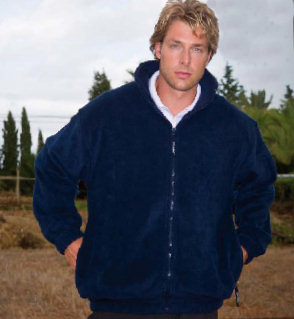
Result Clothing are a promotional clothing brand founded in 1994 based in Colchester, Essex, UK. A visit to their website reveals that they have a 'Retail' arm that sells advanced outdoor clothing made from advanced esoteric materials under the "Result Performance" brand.

Many of the clothing lines are also available through promotional clothing outlets. The purchase of clothing that enables the user to yomp up Snowdon in winter is not the focus of all promotional clothing buyers so the range includes more down to earth items such as fleeces, body warmers and workwear.

The company has a short statement on "Employment Policy" and "Child Labour" on the trade section of its site. "RESULT requires that all authorised garments baring [sic] its name are manufactured under conditions which adhere to strict standards on working hours and good working conditions including factory temperature." and "RESULT does not permit the use of child labour in any part of their manufacturing process." There is a short statement on equal opportunities.

Curiously the Retail section of the site features similar but different statements. On environmental issues the trade section of the site says "RESULT also encourages the use of azo-free dyed fabric where possible" whereas the Retail section says "RESULT Performance prohibits the use of fabrics containing banned amines from certain Azo dyes." While it would be good for all garments to be AZO free, on the Pier32 site you will see many marked as AZO free.

In common with other brands, we'd like to see more specific information on the ethical and environmental issues surrounding their clothing on their site. Where is the clothing made? If there are more detailed policies behind the scenes, how are they monitored?

Because of the brand name and relatively small size, Result makes it difficult to trace any commentary on their activities on the web. If you know more please let us know be sending an email or leaving a comment.

Tuesday, 20 May 2008

Ethical Brand Profile - AWDis hoodies


AWDis, "All We Do is Hoodies" or "Just Hoods by AWDis" all are trade names attached to a new company that we have just begun doing business with. And, yes, all they do is hoodies!

Their website, with an attractive brochure that makes the most of the street culture associated with hoodies (while portraying wearers in a positive light) is justhoods.co.uk. A rich variety of colours are available.

One thing that they have not had time to get around to on their website is their ethics. With no mention at all of fair trade, let alone eco-language, we contacted them to find out more. we were pleased with the response. A set of written Business Partner Guidelines cover the expected points - to summarise: "JUST HOODS BY AWDIS's goal is to create and encourage creation of model operations that provide good jobs at fair wages and also improve conditions in their communities"

On the environment "JUST HOODS BY AWDIS will seek business partners who demonstrate a commitment to progressive environmental practices and to preserving the earth's resources". "Products supplied must conform to all European Union environmental legislation".

Their products are sourced from a factory in Pakistan. Their cotton "is sourced from ethical cotton suppliers in Pakistan local to the factory". More tangibly, the factory is WRAP (Worldwide Responsible Apparel Production) certified - see website - a monitoring organisation based in the USA. Here it is the factory that is monitored and has obtained certification rather than the company but WRAP (a US based entity) have a thorough approach to their certification and their activities give us some considerable comfort that AWDis - a one product, one factory company - is doing what it can to respond positively to the pressures now on even the smallest clothing companies to ensure that its supplies of hoodies are ethically sourced.

Wednesday, 14 May 2008

Ethical Brand Profile - Starworld


Starworld is a very popular choice for the customers of Pier 32 and we have associations with the brand for over 7 years now so we know the quality of the finished t-shirts and other products well and supply it with confidence to our customers. Because we deal direct with the manufacturer, we are able to offer prices which are extremely competitive.

Starworld produces its t-shirts and other clothing in Egypt, an African country with a great tradition in cotton production and one of the more Western facing African nations.

We publish the ethical statement of Starworld on our site - it's a lot more specific than some of the vaguer statements issued by other manufacturers (who may say that they respect the labour laws of the producer countries and then don't go on to tell you where they are or that they permit 16 hour working days....). The American Chamber of Commerce in Egypt publish a summary of Egyptian labour law and it's easy to see how it fits in with the Starworld statement. Indeed it's quite close in many aspects to European labour law.

We like the fact that Starworld are not very good at glossy websites and brochures. It is very evident that money is spent on other things!

We also like that Starworld t-shirts are produced within the Oeko-Tex 100 standard - which means that production is carried out in such a way that the final product is free of any toxic substances.

Starworld now go further with its new range of organic t-shirts that we recently discussed. This gives our customers a cost effective organic option

Digging for dirt found a recent debate at York University on whether it was possible at all to find a supplier that could provide t-shirts in an ethical way and at an appropriate price. It seems that the University Student Union did not have to change its ethical merchandising policy (which was being actively discussed) because Starworld met their stringent cost criteria.

So there we have why Starworld remains our mainstream option for those who want a cost effective organic choice. Know anything different? Please let us know......

Wednesday, 7 May 2008

What is fair trade? Or Fair Trade? Or Fairtrade?

An interesting read is a new article published at the NewConsumer.com website asking how aware the public might be about "what Fair Trade is"?

It's a good article which certainly raises the conciousness that the Fairtrade Foundation label means that the cotton in clothing may be Fairtrade certified but at present the manufacturing will not be, because right now there is no objective means of deciding what exactly Fair Trade is in a manufacturing context. It's all rather subjective.....

The article consistently capitalises Fair Trade - giving it the feel of something that is definite, defined, but I think the reason for this capitalisation in the article is because it's applied to Fair Trade in the context of IFAT - the global network of Fair Trade Organizations. Just as the Fairtrade Foundation certifies PRODUCTS for the UK market, IFAT certifies businesses (such as Divine Chocolate) and organisations (such as Oxfam UK).

The message in the article is that Fair Trade can apply and be certified in respect of the purchase of raw and close-to-raw materials but not after there has been any degree of manufacturing. So neither IFAT or the Fairtrade Foundation certify manufactured clothing. Fair Trade clothing does not exist. Let's talk about fair trade.

Yes we, and many companies like Pier 32, continue talk about fair trade because it is a concept that people can relate to - a phrase for us that means we care who we buy from and we'd like you to too. Whether it's Starworld in Egypt because of our close ties, Continental for their organic products, Wombat for their Fairtrade certified cotton, Adidas for its extensive and transparent monitoring programme, Gildan for its Fair Labor Association accreditation; all we can do is try and be as upfront as possible in sharing what we know. This information is largely shared in this blog - it can help you decide by your own fair trade standards what fair trade is and what you should buy.

Wednesday, 30 April 2008

Ethical Brand Profile - Kustom Kit


Kustom Kit describe themselves as suppliers of "Corporate wear" "a fusion of modern tailoring, innovative fabrics and spirited colours". They provide companies with more formal shirts and blouses as well as producing the more usual t-shirts, hoodies, and polo shirts. There is also a sportswear collection. They are based in Derbyshire in the UK and their products are distributed by promotional wear companies all over Europe.

They are one of the two major divisions of Charterhouse Holdings plc a company involved in the clothing industry but apparently unrelated to the Charterhouse Group, a Private Equity group based in New York.

Kustom Kit display their "Ethical Statement" link on each page of their website. "Kustom Kit adopts a rigorous selection process for garment manufacturers ensuring only those that are totally committed to exceeding our high ethical standards become appointed suppliers. We recognise and honour our duty to protect the workforce used in the manufacture of Kustom Kit garments. Each appointed manufacturer must conform to the following terms as a minimum requirement."

The terms that follow as usual have the emphasis on complying with local law on issues such as minimum wage, working hours, child employment etc. There are elements such as "good working conditions must prevail", a bit subjective but, there you are, it's better than nothing suggesting "we are willing to get supplied by companies who have their employees work in squalor as long as they otherwise tick the local legal boxes".

So how is this enforced? As well as "local agents" inspecting the plants, "As a further safeguard, unannounced inspections are regularly made by Kustom Kit senior management." Now this is genuinely good (there are businesses that will operate a wishful thinking philosophy) - it would be a very insensitive (not to mention stupid) business man who could actually visit a plant that was being run as a sweatshop without wanting to do something about it after seeing such conditions first hand.

What is a shame is that there is no indication of where garments are manufactured.

The conciousness is apparently there on the environmental side too:

"Kustom Kit is also dedicated to protecting the environment and purposely seeks out suppliers who take positive action to minimise both waste and the impact of their manufacturing processes on the surrounding environment".

Readers may be able to provide some enlightenment on some of the issues raised in these ethical brand profiles - please leave a comment.

Tuesday, 29 April 2008

"Blood, Sweat and T-Shirts"

The night before last I caught up with the first episode on BBC's iPlayer - last night at 9pm was the second of this reality TV program that takes 6 young fashionistas out of their cosy existences in the UK and plants them for 6 episodes covering 6 weeks into various clothes production plants in New Dehli, India.

We did not find out too much about the lives of the Indian workers and what they think of their lot but we did hear from owners and managers of the factories and the families in the homes in which they work.

The first factory produced clothes for M&S, Zara etc. It was bright, clean, HUGE - state of the art for India apparently. The workers were paid by the hour but clearly were expected to work hard (no chatting!) in a mind numbingly boring environment in which they were each one part of a production line for a garment. I was not clear how long the working day was but it was a lot longer than the 7 hours most of us enjoy in the UK.

The pay? About £1.20 per day. Now you may say, everything's cheaper in India. Well, some things are cheaper in India but our young participants found that buying a can of antiperspirant will cost that day's wages. Now I don't think I would quite class that factory as a sweatshop but clearly you can't afford to sweat....

(It was not actually antiperspirant - my invention - that was being bought but something equally basic to us in the West and very similar in cost).

The group then encountered another way to afford a can of antiperspirant - work in a small back street factory producing 'fashion' clothing. Here there is no production line; you produce a whole garment and get paid piece rate. At approximately 15p per garment you have to produce 8 to buy that anti-antiperspirant. Here the workers might normally turn in 18 hour days in order to make what they can at the piece work rate.

Of course these programmes were being filmed in establishments where permission had been given to film. Who know what lies beyond?

The trouble with programmes like this is that they play on the temper tantrums of the young participants to add some drama while the diligent work of the Indian's making these clothes for us largely goes unnoticed. But the point should get across to the young BBC3 audience.

I suppose I should not get uptight about what I describe as a "mind numbingly boring environment". It's what many of our western ancestors used to work in after the industrial revolution, after they moved away from working on the land. And the standard of living is probably better than our own industrial revolution ancestors too - they did not have antiperspirant either.

But what grates, and what we all should remember, is that our relatively lazy lifestyle and spare time to enjoy a service industry culture is based on the toil of the people who make our 'things' for us. Which is why we should give a little thanks in return next time we buy a t-shirt by being careful about what we choose.

Friday, 25 April 2008

Pier 32 servers now powered by renewable energy!


Yes, this blog and our website are now presented to you from servers that are powered entirely from renewable energy sources. Our host, 1&1, is the first large web host who relies solely on renewable energy. They now utilise wind, water and solar power to keep their servers powered up in accordance with the Renewable Energy Certification System (RECS).

It's a small step, but an important one - computers use far more energy when they are powered up than you may imagine. After you read this and walk away from your computer remember to put it to 'sleep' or, better still, turn it off completely.

Wednesday, 23 April 2008

A t-shirt is a t-shirt..... Am I right?

Well a t-shirt has a collar, two arm holes and no buttons so, insofar that this is true, the statement is correct.

But look a little deeper and you find that the variety is enormous:

Crew necks, V-necks, deep V-necks.....
Short sleeves, long sleeves, three quarter sleeves, no sleeves......
Loose fit, tight fit, lady fit.......
Light weight, medium weight, heavy weight, layered.....
Cotton, vintage cotton, organic cotton, bamboo, polyester, polyester / elastane etc etc

- and that's before we start considering the trivial details of colour!

So for promotional wear, should you be thinking beyond "t-shirt"? And if so what will the drivers be?

How often will the shirt be worn?

Some t-shirts will be worn once. We'll hate to suggest they are then discarded, but it happens. Here it normally makes sense that the t-shirt is an economy light weight cotton fabric. But if these t-shirts are to be worn again and again - the more built in quality in the fabric and the printing the better because after all they promote YOUR company or cause. A more resilient heavier weight might be a wise investment.

How warm is the climate?

Although there is normally a correlation between weight and ruggedness, some light weight fabrics are long lasting. So if it's going to be hot, perhaps a better investment is in fabric quality rather than weight.

And then there's humidity. Perhaps the wearers are to be engaged in sporting activities? This needs to be taken account of in making a choice and there are quick dry t-shirts now available made from fast wicking 100% textured polyester that will in some circumstances be a more comfortable alternative to cotton.

Do you want to fuss about size?

If distributing many t-shirts and you don't know who is to be turning up, then it's a good idea to invest in t-shirts that look good on many differently shaped people. Some styles need the right fit to look good, others are far more tolerant.

What exactly is being printed?

When it comes to printing, using plastisol or water based inks, cotton gives safe, predictable results. that said, any fabric making up a promotional wear t-shirt is likely to be suitable for most applications but it's good to take advice for unusual size, shape or colour designs.

What's in fashion?

The t-shirt manufacturer with the longer tighter style will tell you one thing, the one with the shorter looser cut another! But it's a t-shirt, and as long as the cut is right and fabric is quality, it will look good. Think about the range of people who will be wearing it; high fashion does not necessarily work when it comes to promotional wear.

What are your organisation's ethical policies?

Taking account of everything that precedes this question, have you also taken account of the stated ethical policies for purchasing of the organisation that you work for? They may not be communicated well or you may not think they mean it. But if some embarrassing publicity is going to be directed at your organisation because you've made the decision to purchase from a source that is at best obscure in its ethics then it may be you that carries the can.

And the wearer's ethics?

Now we are getting to the core of the business decision. The promotional wear is likely to carry two logos - yours and (unobtrusively to everyone except the person who wears it) that of the t-shirt maker. And quality wise, the recipient may have an adverse reaction to something they perceive to be a throwaway garment.

How about your ethics?

If the purchase decision is yours and you'd be be fussy about what you bought for yourself then why not apply the same principles in buying for your company? The arguments for buying ethically are strong and it need not cost materially more than other options. You'll probably be easily able to justify the cost differential to anyone who questions you!

And if you really want to impress?

Buy organic cotton for it's environmental ethics and its kindness to skin. Or bamboo, for its ethics and its feel of luxurious softness.

There you have it. A t-shirt is not a t-shirt. It's a statement about you and the extent to which you consider the people who wear it. If this all makes the decision too complicated then a quick discussion with our team here at Pier 32 will soon help you out!

Monday, 14 April 2008

Starworld Organic collection ready to roll....

A few weeks ago we reported the news that Starworld, our supplier of ethically sourced t-shirts from Egypt, were about to introduce a whole new range of organic t-shirts and other promotional clothing.

Well, knowing that Africa is a place where things can move just that little bit slower at times, we were getting a little concerned that we would not be able to launch as and when we intended. And we were right, but only a couple of weeks later than originally expected we have the new Starworld catalogue in our hands and have updated our website to reflect that fact that we can now deliver these "fair price" organic t-shirts into our clients' hands.

Alongside clothing from Okarma and Continental that now gives Pier 32 buyers the choice of 3 distinct ranges of organic clothing. If you are feeling too spoilt for choice to make your mind up, don't worry, get on the phone, we are here to help!

Friday, 4 April 2008

Ethical Brand Profiles - Beechfield and Quadra

Beechfield are a specialist producer of headwear. A sister brand, Quadra, make all sorts of bag. So this article deals with both of them.

Curious territory this. Whereas most clothing brands are anxious to say something about themselves and the ethics of their sourcing on their websites, there is nothing on the Beechfield or Quadra sites to say anything about themselves or their trading connections. Both sites are just product catalogues, which is fine for most of their customers but makes things really awkward for writing something useful in this post!

Trawling the web I did find commentary that outlined how Beechfield respect and understand local laws on employment, human rights etc.

Beechfield also say that their suppliers undergo strict assessment of ethical policy and that they have a dedicated manufacturing base which indicates some level of permanence in the supply chain, which is good.

However, just to be cynical for a moment (and here I am making a general observation on the issue, not necessarily directed at Beechfield) when it comes to local laws you'd hardly expect anyone to brag about breaking them! But where local laws are not up to say UK standards, then what happens? What happens when local human rights are different to those we enjoy in the UK? It would always be good for companies to go that one step further so as to avoid giving the impression that just perhaps they may be out there choosing to get supplies from countries with the least regulation on working conditions.

I did my usual search on the web for adverse commentary on Beechfield or Quadra supply chains and could find none. Let's hope this is a good pointer. I could however find no comment anywhere on environmental policies. (Bad)

Any enlightenment is welcome - please leave a comment.